
The Karmanghat Hanuman Temple in Hyderabad, Telangana, is no ordinary Hindu temple. With a history believed to span more than 800 years, this ancient shrine is associated with a remarkable legend—one in which even the mighty Mughal emperor Aurangzeb was forced to retreat before the divine power of Lord Hanuman.
But what happened at this temple that allegedly frightened one of the most powerful Mughal emperors? Why did his soldiers fail to destroy it? And how did this mysterious encounter give the temple its unusual name?
Let’s explore the fascinating history and legends of the Karmanghat Hanuman Temple, one of Hyderabad’s oldest and most revered Hindu temples.
The Origins of Karmanghat Hanuman Temple: A Legacy of the Kakatiya Dynasty
The history of Karmanghat Hanuman Temple dates back to the 12th century, during the reign of the Kakatiya dynasty, which ruled significant parts of present-day Telangana and Andhra Pradesh. According to local tradition, the temple’s origins are linked to a Kakatiya ruler who encountered something extraordinary while hunting in a dense forest.
The story goes that the king, exhausted after a long hunting expedition, decided to rest beneath a tree. As he sat there, he suddenly heard a mysterious voice chanting the sacred name of Lord Rama. Curious about the source of the chanting, the king followed the sound deeper into the forest. To his astonishment, he discovered a stone idol of Lord Hanuman seated in a meditative posture. The king was overwhelmed by the peaceful atmosphere and the powerful divine presence he experienced at the site.
That night, Lord Hanuman reportedly appeared in the king’s dream and instructed him to construct a temple at the very spot where the idol had been discovered. The king obeyed the divine command and built a temple dedicated to Lord Hanuman. His successors are believed to have continued maintaining and protecting the sacred shrine. Over the centuries, the temple became an important centre of Hindu worship, attracting devotees seeking the blessings of Lord Hanuman. However, centuries later, the temple would become associated with one of the most extraordinary legends in its history.
Aurangzeb’s Invasion of Golconda in 1687
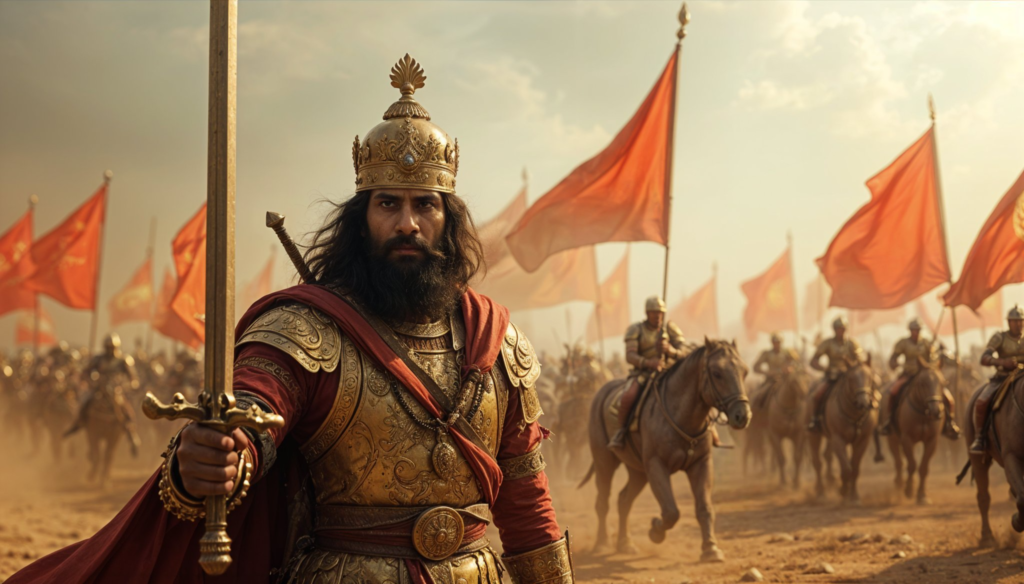
In 1687, the Mughal emperor Aurangzeb launched his military campaign against the Qutb Shahi dynasty, which ruled the prosperous kingdom of Golconda. His forces laid siege to the formidable Golconda Fort near Hyderabad, eventually bringing the kingdom under Mughal control. Aurangzeb’s reign is also remembered for the destruction of several prominent Hindu temples across different parts of India. According to the traditional account associated with Karmanghat Hanuman Temple, Mughal soldiers attempted to demolish the shrine during this period. But what happened next would become an enduring part of the temple’s folklore.
When Aurangzeb’s Soldiers Failed to Destroy the Hanuman Temple
As the legend goes, Aurangzeb’s soldiers arrived at the Karmanghat Hanuman Temple carrying heavy tools and weapons intended to destroy the structure. Confident of their strength, they approached the temple and attempted to enter its inner sanctum, or Garbhagriha. However, something inexplicable happened.
Despite repeated attempts, the soldiers reportedly found themselves unable to proceed. According to the legend, an invisible divine force prevented them from entering the sacred shrine.No matter how hard they tried, they could not reach the idol of Lord Hanuman. Frustrated and bewildered, the soldiers reported the mysterious incident to Aurangzeb. The emperor, unwilling to accept defeat, supposedly decided to visit the temple himself.
The Mysterious Divine Voice That Frightened Aurangzeb
According to the temple’s popular legend, Aurangzeb personally arrived at the shrine carrying an iron crowbar, determined to break down its walls and destroy the idol. He believed that no earthly power could stop him. But as he approached the temple, a terrifying sound of thunder suddenly echoed through the surroundings. Startled by the deafening noise, Aurangzeb reportedly dropped his crowbar.
Then came something even more extraordinary. A mysterious divine voice was said to have thundered:
“Mandir todna hai Rajan, toh Kar Man Ghat!”
Meaning: “O King, if you wish to destroy this temple, first make your heart strong!”
According to local belief, the emperor was so shaken by this supernatural warning that he abandoned his attempt to demolish the shrine. The temple remained standing. For generations, devotees have regarded this story as a powerful example of Lord Hanuman’s divine protection and the enduring strength of Hindu faith. It is important to note that this encounter is preserved in local religious tradition; the miraculous events and Aurangzeb’s personal involvement have not been independently verified through contemporary historical records.
How Did Karmanghat Hanuman Temple Get Its Name?
The temple’s distinctive name is traditionally connected to the divine words reportedly heard by Aurangzeb. The expression “Kar Man Ghat” is popularly interpreted as a challenge to strengthen one’s heart before attempting to destroy the sacred shrine. According to the legend, these words eventually gave rise to the name Karmanghat. The story has been passed down through generations, becoming an inseparable part of the temple’s spiritual identity.
Even today, the name Karmanghat reminds devotees of the extraordinary legend surrounding Lord Hanuman and the Mughal emperor.
Dhyana Anjaneya Swamy: The Meditative Form of Lord Hanuman
One of the most remarkable features of Karmanghat Hanuman Temple is its presiding deity, worshipped as Dhyana Anjaneya Swamy, meaning Lord Hanuman in a meditative posture. Unlike the familiar images of Hanuman displaying immense physical strength or carrying the Sanjeevani mountain, the deity here is depicted in a calm, seated position.
The stone idol radiates an expression of serenity, devotion and spiritual concentration. This form of Hanuman reminds devotees that true strength comes not only from physical power but also from inner discipline, unwavering faith and devotion to Lord Rama. The temple complex also houses shrines dedicated to several Hindu deities, including Lord Rama, Lord Shiva, Goddess Saraswati, Goddess Durga, Santoshi Mata, Venugopala Swamy and Lord Jagannath. These shrines make Karmanghat an important spiritual destination for devotees visiting Hyderabad.
Why Karmanghat Hanuman Temple Remains Special
More than eight centuries after its traditionally believed foundation, the Karmanghat Hanuman Temple continues to attract devotees seeking blessings, peace and spiritual strength. Its significance extends beyond its ancient architecture and religious traditions.
For believers, the temple represents the triumph of devotion over arrogance and the enduring power of faith in the face of adversity. The legend of Aurangzeb’s failed attempt to destroy the shrine has become a symbol of divine protection in the temple’s devotional history. It reminds us of a timeless teaching associated with Lord Hanuman:
True strength does not come from armies, weapons or worldly power. It comes from unwavering devotion, courage and faith in Dharma.
Visit the Ancient Karmanghat Hanuman Temple in Hyderabad
If you ever visit Hyderabad, make time to explore the ancient Karmanghat Hanuman Temple in Telangana. Whether you are fascinated by the history of the Kakatiya dynasty, interested in the legends surrounding Aurangzeb, or simply seeking the blessings of Lord Hanuman, this sacred shrine offers a memorable spiritual experience. Standing as a living testament to centuries of worship, the temple continues to preserve its traditions and inspire generations of devotees.
Jai Shri Ram! Jai Bajrang Bali!